
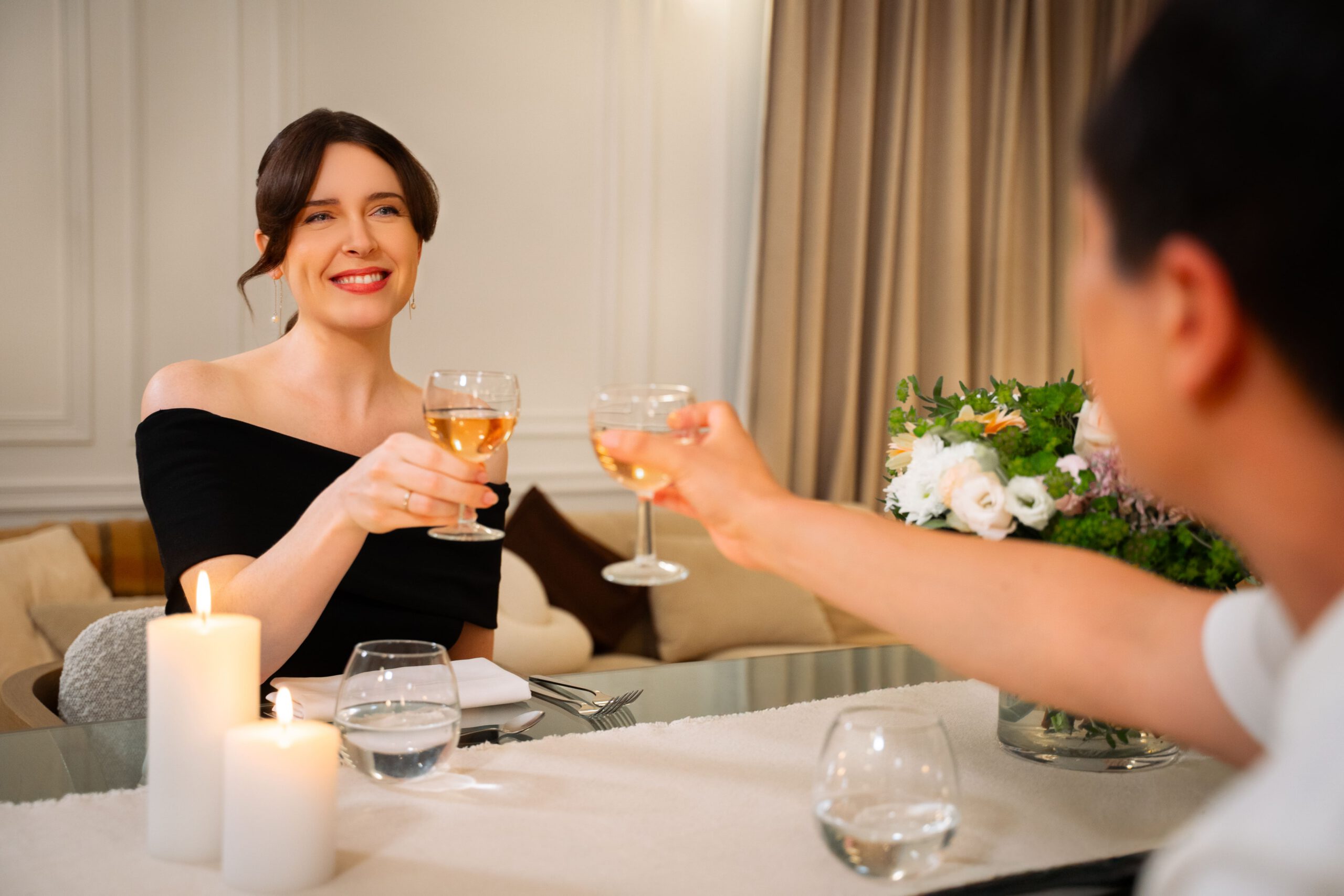
Whether you host in a Paris apartment, a villa rented for the weekend or a family home, the fundamentals are the same: carefully chosen seasonal produce, an atmosphere built from the moment guests arrive, and a coherent menu. What the guides rarely say is that a gastronomic dinner at home is won as much beforehand as on the night.
What is a gastronomic dinner at home?
The word "gastronomic" is often wrongly intimidating. It evokes Michelin stars, complex techniques and professional equipment. Entertaining elegantly at home is something else: attention to produce, to the progression of the menu and to the overall sensory experience.
Gastronomy does not mean complexity
A gastronomic meal at home rests on three pillars: first-rate seasonal produce, a coherent menu structure and a carefully considered sensory experience (light, music, table, service). Technique comes after. A fillet of John Dory cooked to perfection with citrus butter beats any over-engineered dish that misses. The principle: buy less, but buy better.
Intimate dinner or large reception: finding the right format
For a gastronomic dinner at home, eight guests is the ideal number, always even to balance the seating plan. Beyond that, logistics (oven, space, service) complicate the experience; below four, a more relaxed format works better. Past a dozen guests, outside help or a cocktail dinner format becomes relevant.
Creating the atmosphere: awakening the five senses
Lighting and candles
Light is the first lever of a successful atmosphere. Avoid direct white ceiling lights, which flatten the space and harden faces. Favour warm light, ideally candles at varied heights (tealights on the table, a candelabra in the background), complemented by indirect lamps. Avoid scented candles: they mask the aromas of the food.
Music, flowers, scents
Music should be forgotten: present enough to avoid awkward silences, discreet enough not to cover conversation. Acoustic jazz, contemporary piano or light bossa nova carry an evening without tiring. Choose flowers that are unscented or very lightly scented, low and compact: peonies in spring, anemones in winter, cosmos in autumn.
Setting the table the French way
French table setting follows precise codes: forks are laid tines down (not tines up as in English-speaking countries), and glasses are arranged diagonally to the upper right of the plate. Natural linen or white cotton, porcelain and fine cutlery form the base of a gastronomic table at home. See our guide to setting a French table.
Building the gastronomic menu
The structure of an exceptional menu
A classic five-course menu: gourmet amuse-bouches with the aperitif, a cold or hot starter, the main course with its garnish, an optional cheese course, and dessert. The amuse-bouches set the tone in one bite; the starter opens the appetite without satisfying it; the main is the heart of the menu; the dessert is often the most lasting memory. A seven-course menu adds a pre-starter and a pre-dessert and lengthens the evening: keep it for occasions where time is no object and a professional handles production.
Choosing seasonal produce
Seasonality is the surest shortcut to quality. A seasonal product from a good supplier needs little work to shine; out of season, the same product costs more and disappoints. Black truffles and scallops in winter, asparagus and morels in spring, langoustines and heritage tomatoes in summer, ceps and duck in autumn: the star products change and naturally set the direction of the menu.
Seasonal menu examples
| Season | Starter | Main course | Dessert |
|---|---|---|---|
| Autumn | Red kuri squash velouté, toasted hazelnut oil | Duck breast, honey jus and sautéed ceps | Thin fig tart, chestnut honey ice cream |
| Winter | Seared scallops, truffle beurre blanc emulsion | Roast beef fillet, gratin dauphinois, red wine jus | Dark chocolate fondant, light vanilla cream |
| Spring | Warm white asparagus, citrus vinaigrette | Herb-roasted rack of lamb, pea mousseline | Wild strawberries, yoghurt sorbet, almond tuile |
| Summer | Fresh langoustine tartare, tomato gazpacho | Oven-baked gilt-head bream, confit fennel, lemon butter | Rosemary-roasted peaches, almond milk ice cream |
These compositions illustrate the logic of seasonal coherence; adapt them to your tastes and skill. For festive occasions, see our festive gastronomic menu.
Food and wine pairing for a gastronomic dinner
Often the least considered aspect of dinners at home, and one of the most decisive for the overall experience.
The basic rules
Dry whites (Chablis, Sancerre, white Burgundy) go with fish, shellfish and delicate starters; light reds (Pinot Noir, Gamay) with poultry and white meat; structured reds (Cabernet Sauvignon, Syrah) with lamb and beef. For aged cheeses, a regional pairing almost always works: Comté and vin jaune, Roquefort and Sauternes, goat's cheese and white Sancerre. A common mistake is a tannic wine with fish, which accentuates bitterness; conversely, a very lively white with braised red meat unbalances the pairing. Read our complete food and wine pairing guide.
Asking a sommelier
For an important dinner, a sommelier changes the result radically: a coherent progression across courses, precise quantities per bottle and no costly mistakes. Prémices offers this wine pairing option as part of its culinary service, which greatly simplifies the organisation.
Service: presenting the dishes with elegance
Plating: two golden rules
First, the plate must breathe: leave at least a third of the surface visible, as the white of the porcelain is part of the presentation. Second, choose a focal point: the main element sits slightly forward of centre, with garnishes and sauce arranged around it without drowning it. Restaurant-style plating comes from economy, not accumulation. Wipe the rim before serving: that detail makes an immediate difference.
The pace of service
Allow 20 to 25 minutes between courses so everyone can finish, pick up the conversation and enjoy the wine. Haste is the enemy of elegance. If you cook alone, plan preparations that hold without suffering: sauces to finish, vegetables to glaze, meats to finish in the oven.
Seating plan the French way
The French seating plan separates couples to encourage conversation, alternates men and women where possible, and places guests of honour beside the hosts, who sit at either end of the table facing each other. A seating plan prepared in advance, however simple, avoids hesitation and signals attention to each guest.
Preparing ahead to enjoy your guests
The biggest mistake is wanting to cook everything on the night, which means an evening in the kitchen while guests wait.
Three days to one day before
Three days before, draw up the full shopping list and order from the right suppliers (butcher, fishmonger, wine merchant, delicatessen). Two days before, prepare what keeps (stocks, sauces, confits, tarts, desserts that hold). The day before, set the table, prepare the amuse-bouches, select the wines and set up the service station.
On the day: only the finishing touches
On the day, everything should be ready: only quick searing, plating and controlled reheating remain. If you spend more than 45 minutes in the kitchen during the meal, the preparation was insufficient. The secret of hosts who seem effortless is the work done three days earlier.
Why not hand it to a chef?
Beyond a certain level of ambition or number of guests, delegating to a professional is not an admission of defeat but a choice of quality and peace of mind.
What a private chef or gastronomic agency takes care of
A private chef arrives about an hour and a half before dinner with produce selected that morning, cooks on site, plates, serves and tidies the kitchen before leaving. All you have to do is be at the table with your guests. An agency goes further: a chef selected for your menu and occasion, the sommellerie option, a maître d' for service, and if needed an exceptional venue among our partners. Prémices works with chefs selected on strict criteria (tasting tests, punctuality, plating, hygiene) and, for some events, sommeliers and Meilleurs Ouvriers de France.
Budget and occasions
Each service is quoted according to guest numbers, menu, venue and services requested, with prices varying by chef, menu complexity, region and options (sommellerie, maître d'). See our pricing. The most frequent occasions: a romantic dinner at home, an intimate birthday, a family gastronomic dinner, a business reception at home, events in a villa or prestige rental.
Prémices bespoke gastronomic dinners
Prémices organises bespoke gastronomic dinners at home in Paris and Île-de-France, on the French Riviera, in the Alps and across France. Every chef is selected, tested and supported, with a 4.9/5 rating on Google.
A gastronomic dinner at home without lifting a finger? Request a quote.
Frequently asked questions
How do I create a gastronomic atmosphere at home on a small budget?
It mostly comes down to light and care at the table. Replace ceiling lights with candles and warm lamps, lay a fabric tablecloth, folded napkins and stemmed glasses suited to the wines, and add a few low, unscented flowers. These affordable touches transform the atmosphere before the first dish is served.
How many courses should I serve?
Five courses is the best structure for a dinner at home: amuse-bouche, starter, main, cheese and dessert. Seven courses suit long evenings or very confident cooks. What matters is coherence and balance between courses, not their number.
Which seasonal products should I choose?
Autumn: ceps, duck, figs. Winter: scallops, foie gras, black truffle. Spring: white asparagus, milk-fed lamb, morels, Gariguette strawberries. Summer: langoustines, heritage tomatoes, peaches. Buy from good suppliers (markets, artisan butcher, fishmonger): freshness does the rest.
How do I set an elegant table for a gastronomic dinner?
French service sets the basic rules: forks tines down, glasses diagonally to the upper right, knives on the right with the blade facing the plate. A white or ivory linen tablecloth with an even drop, porcelain and fine cutlery form the base.
When should I hire a private chef rather than cook myself?
From eight to ten guests, when the menu exceeds an amateur cook's comfort, or simply when the host wants to be fully available for the guests. It is also the obvious choice for big occasions (milestone birthdays, business dinners, villa receptions) where improvisation is not an option.