
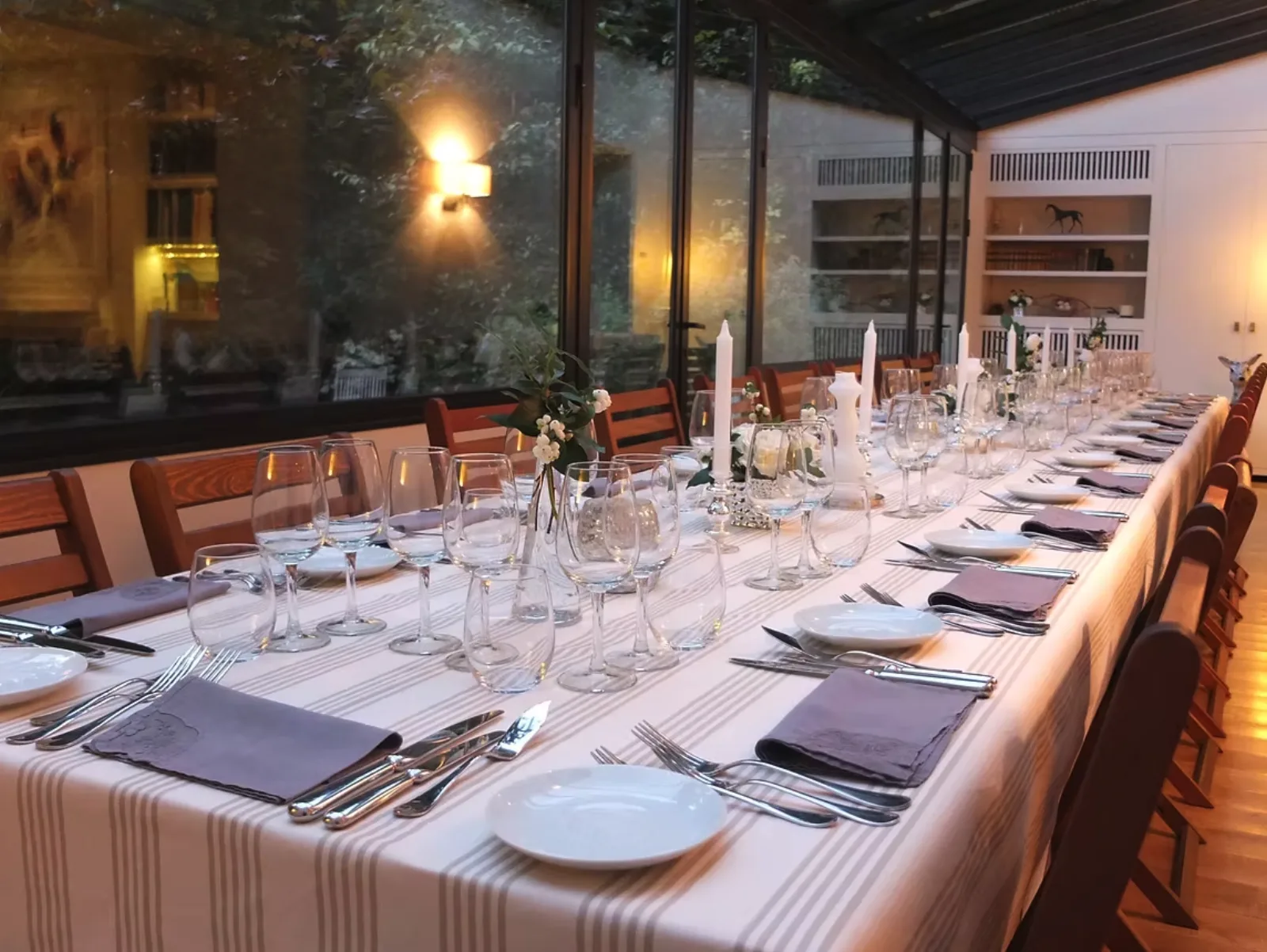
In France, Mother's Day falls on the last Sunday of May (or the first Sunday of June when it coincides with Pentecost). Chefs' availability is limited on that date, so if you are thinking of a private chef to take care of the meal from start to finish, plan ahead.
Why a homemade menu remains the finest gift
Emotion comes through the plate
There is no more personal gift than a meal prepared for someone. The care taken in choosing produce, plating and time spent in the kitchen speaks without words. What separates an ordinary meal from a memorable one is often a detail: an edible flower on the plate, an unexpected pairing, a technique that turns a simple ingredient into something remarkable. Those details can be learned, and that is what we share here.
May produce in the spotlight
May is one of the most generous months to cook in France. Asparagus, white and green, is at its peak (April to June); Gariguette and Mara des bois strawberries are at their best (April to July, peaking in May and June); fresh peas arrive (May to July); and spring morels, with a very short season (April to May depending on altitude and region), feature in gastronomic kitchens fresh or dried. Spring lamb is at its best in May and June: tender, lean, with a finesse autumn lamb lacks.
Composing your menu: the star products of spring
Vegetables
Asparagus (white from Alsace, green from the Landes or the Loire Valley) is a must for a May celebration; its texture and slight bitterness naturally call for creamy sauces and white Burgundy. Fresh peas, shelled at the last minute, have a sweetness frozen peas never match, and pink radishes bring freshness and colour. For herbs: chives, fresh mint and edible flowers (pansies, nasturtiums, borage) give an instantly spring-like touch.
Fish and meat
Salmon, a safe bet as a starter, pairs particularly well with Gariguette strawberries as a tartare. Scallops are at the end of their fishing season in early May (the regulatory closure is around mid-May), so for a late-May meal choose fresh salmon or langoustines instead. For meat, a leg of spring lamb is the festive dish par excellence for a big family lunch; free-range poultry, chicken supremes or guinea fowl, is technically easier and a fine base for refined morel sauces.
Fruit and desserts
The strawberry reigns over May desserts: pavlova, fraisier, thin tart, all visually spectacular. Raspberries start to appear at the end of the month, and red berries (redcurrants, blueberries) add colour and acidity.
Three complete menus to celebrate your mother at home
| Menu | Guests | Difficulty | Prepare the day before | Format |
|---|---|---|---|---|
| Intimate | 2 to 4 | Medium | Yes (partly) | Dinner or lunch |
| Prestige | 6 to 8 | High | Yes (recommended) | Family lunch |
| Festive brunch | 10 and more | Easy to medium | Yes (essential) | Standing brunch |
The intimate menu (2 to 4 people)
Designed for a dinner or lunch for two or a small table of close family, with the focus on fine produce and precise plating.
Wines: with the starter, a Muscadet sur lie or a white Sancerre, whose mineral acidity cuts through the salmon and suits the freshness of the strawberry. With the main, a Mâcon-Villages, buttery and rich enough to support the morel cream without crushing it. With dessert, a demi-sec rosé champagne, whose bubbles cleanse the palate after the sweetness of the pavlova.
The prestige menu (6 to 8 people)
Designed for a big family lunch, with careful organisation and part of the preparation done the day before.
Wines: with the starter, a Pouilly-Fumé or a Chablis, whose liveliness and green notes suit the pea velouté. With the lamb, a Saint-Émilion or a red Crozes-Hermitage: supple tannins or spicy notes that stand up to the confit lamb without dominating it. With dessert, a rosé Crémant d'Alsace: light, fruity and festive, it suits every palate around a large table.
The festive brunch menu (10 people and more)
Brunch is the ideal format for a large family gathering where generations and appetites mix, built on movement, easy handling and the alternation of sweet and savoury.
- Savoury: homemade rosemary and olive focaccia (made the day before, reheated for 10 minutes), a two-salmon terrine (fresh and smoked, moulded the day before, sliced in the morning), mini quiches with spring vegetables (asparagus, peas, chives), a board of three or four aged cheeses with different textures.
- Sweet: a large red berry pavlova (meringue made the day before, assembled at the last minute), a strawberry tart with Chiboust cream (pastry cream lightened with Italian meringue).
- Drinks: pink grapefruit mimosas (prosecco and fresh grapefruit juice), homemade sparkling raspberry juice (blended, strained raspberries topped with sparkling water and a squeeze of lemon).
Brunch needs no table service but rigorous preparation: cook or assemble everything the day before so the platters can be set out in under an hour on the morning. See also our guide to hosting a brunch at home.
Chef techniques to elevate every dish
Plating, the first pleasure of the eyes
The odd-number rule is fundamental in gastronomy: three or five visual elements per plate, never four, which creates a static symmetry. A chicken supreme, five asparagus spears and three dots of sauce give the eye something to follow. Colour contrast matters as much: on a white plate, set a vivid green (asparagus, chives) against a creamy white (sauce, mousseline), with a bright accent (an orange nasturtium, a few pink peppercorns). Edible flowers, found at garden centres or some greengrocers, are the most accessible way to give a homemade plate a restaurant look; a single flower placed with intention changes the perception of the dish.
Preparing ahead without sacrificing quality
What can be made the day before without loss: pavlova meringue, tart cases and sponges, veloutés and baked creams, terrines, marinades, confit lamb. What must be done on the day: final plating, emulsified sauces (hollandaise, beurre blanc), fish cooking (a salmon tartare is made 30 minutes before, no more) and Chantilly. Resting time is often neglected by amateur cooks: a confit leg of lamb should rest at least 30 minutes covered before carving, and a roast loses half as much juice when rested.
Wine pairing for a successful Mother's Day meal
A few principles are enough to make coherent choices that lift the whole meal; for more, our sommellerie service can design a bespoke pairing for your event. The regional pairing is the most reliable starting point (Provence lamb and Rhône wines, Bresse poultry and white Burgundy). The wine's acidity cuts through fat: a creamy sauce calls for marked acidity, not a round, oaky wine. Tannins and proteins balance each other: a tannic red steadies a confit red meat. For fruit desserts, the wine must be at least as sweet as the dessert, or it will taste sour and hard. Our food and wine pairing guide goes further.
Why not give your mother the experience of a private chef?
Rather than spending the day in the kitchen for an uncertain result, you offer a complete gastronomic experience. A chef comes to your home, designs the menu with you according to the season, prepares and plates every dish on site, then leaves the kitchen clean. It is not meal delivery but a human presence and real skill: the meal was cooked for you, that day, with produce the chef selected that morning. For Mother's Day it takes on a special meaning: giving a mother who has often been at the stove all her life the chance to do strictly nothing, not even open a bottle.
Prémices selects its private chefs on strict criteria (punctuality, plating, hygiene, gastronomic level) and is rated 4.9/5 by its clients, for an intimate dinner in Paris as well as a large family lunch in the regions. A chef can design a bespoke menu around May produce, handle everything and add a sommelier pairing as an option. For a gastronomic experience at home to offer, it is the most direct route. Each quote is bespoke, depending on the number of guests, the menu and the region.
A chef for Mother's Day? Request a quote: availability on that date is limited.
Frequently asked questions
What dish should I make for Mother's Day?
It depends on the number of guests and your cooking level. For two to four, a chicken supreme with morels and asparagus is a realistic gastronomic choice for a non-professional cook. For six to eight, a seven-hour leg of lamb is the festive dish par excellence: made the day before, it needs no supervision while cooking and always impresses.
Which fish or meat should I choose?
In May, salmon as a starter (fresh, as a tartare with Gariguette strawberries) and spring lamb as a main course. Scallops are available in early May but the fishing season closes around mid-May, so for a late-May meal prefer fresh salmon or langoustines. Free-range poultry remains the most technically accessible option for a refined main course.
Which fruit and vegetables are in season for Mother's Day in France?
At the end of May: asparagus (white and green), Gariguette and Mara des bois strawberries, fresh peas, morels (very short season, fresh or dried at the end), pink radishes, chives and fresh mint. Spring lamb is at its best in May and June.
How do I prepare a festive menu ahead?
Identify what holds perfectly overnight: meringue, terrines, chilled veloutés, confit lamb, sponges and tart cases, gratins. On the day, only plating, hot sauces and short cooking (fish, poultry) remain, which reduces the work on the day to under an hour.
Which dessert will impress easily?
A strawberry pavlova is the most spectacular dessert for moderate effort: the meringue is made the day before (two hours drying in the oven), the cream and strawberries go on at the last minute. A classic fraisier is more demanding but can be made entirely the day before.
Can I hand the meal over to a private chef?
Yes, that is exactly what Prémices offers for Mother's Day. A private chef takes care of the whole meal: menu, sourcing, cooking on site, plating, service and cleaning the kitchen. Book well ahead, as availability on that date is limited.