
Entertaining with elegance is less a question of budget than of method. The atmosphere is prepared, the welcome is thought through and the pace of the evening is orchestrated. Here are the five levers that separate an ordinary dinner from an evening your guests will remember.
What really distinguishes an elegant evening?
Elegance at home means putting your guests at ease, not impressing them. It is not about inherited china or square metres but about attention to others. A dinner becomes elegant when every decision, from fresh flowers to the first glass served on arrival, sends the same message: you matter, your presence here was prepared for. Three markers make the difference:
- A coherent atmosphere. Light, scent, temperature and music form a first impression that shapes everything else. Coherent does not mean sophisticated, simply considered.
- A fluid welcome. A host available at the door, who takes the coat, introduces people and hands over a glass within thirty seconds: that is prepared, not improvised.
- The sense that nothing jams. No waiting between courses, no host disappearing into the kitchen for twenty minutes, no visible tension: guests can surrender to the conversation.
1. Create the atmosphere before the guests arrive
Atmosphere takes thirty minutes to prepare and is felt for three hours. Light is the most underestimated parameter: strong white light turns an apartment into a meeting room, while warm light (candles on the table, lamps rather than ceiling lights) changes the register immediately. Music should be present without being heard: jazz, instrumental soundtracks or soul at a volume that allows normal conversation, with the playlist prepared the day before. As for scent, a natural candle with a discreet note (wood, linen, citrus) or unscented fresh flowers is enough; avoid incense or sweet fragrances that interfere with aromas at the table.
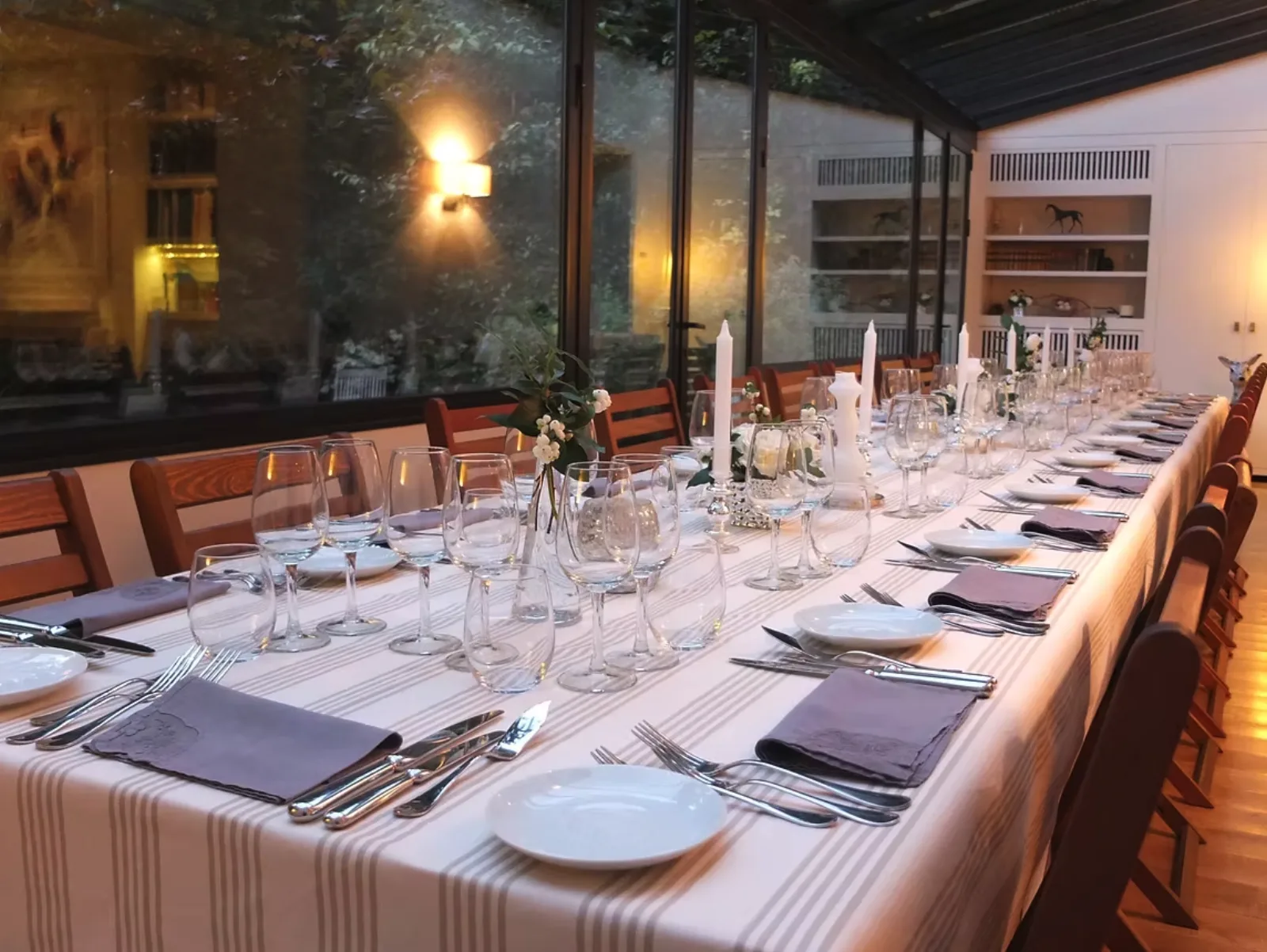
A well-set table signals intention before the first course. Three principles suffice: symmetrical cutlery and aligned glasses, because an ordered table rests the eye; a simple centrepiece (a few flowers in a plain glass, a branch of eucalyptus, low candles that do not block the view); and place cards for dinners of eight or more, to remove seating awkwardness and compose good neighbours. See our guide to setting a French table.
2. Choose a menu that does not keep you in the kitchen all night
The ideal menu is the one the host has not cooked under pressure. Three courses executed calmly always outclass six served in tension. A successful intimate menu follows a progression: a light, fresh starter to open the appetite, a main course where seasonal produce expresses itself fully, and a dessert that closes without heaviness. With four courses, cheese fits naturally between main and dessert, with a short, well-aged selection rather than an exhaustive board. For exceptional produce, see our festive gastronomic menu; for receptions beyond twenty guests, our guide to organising a private reception.
The most tangible difference described by those who have hired a private chef is not on the plate but in their own evening. The host is at the table from the starter, attentive to the guests rather than a saucepan. The chef arrives about an hour and a half before the meal, cooks, plates, serves and tidies up. The feedback we hear most often: "I finally enjoyed my own party."
3. Welcome your guests and orchestrate the pace
The first five minutes after each arrival are decisive: the host at the door, a glass handed over quickly (champagne, white wine or sparkling water as known preferences dictate), active introductions to those already present. Allow forty to fifty minutes for the aperitif: long enough for everyone to arrive and move past small talk. Under thirty minutes it is frustrating; over an hour, appetites grow impatient.
Moving to the table is the first pivot: announce it clearly. Once seated, the pace between courses matters more than the dishes themselves. Twenty to twenty-five minutes between starter and main is comfortable; beyond thirty-five, the momentum of the conversation breaks. These transitions are exactly what a private chef manages, reading the table and adapting service without the host orchestrating anything.
4. Pair food and wine, even without being an expert
A simple pairing transforms the experience: a dry, mineral white with a saline starter (scallops, oysters), a structured red with meat in sauce, a sweet wine with a fruit dessert. Some Prémices chefs work with Meilleur Ouvrier de France sommeliers who can design the pairings for a bespoke evening. See our sommellerie and our pairing chart.
5. The small touches that signal great refinement
These take less than twenty minutes to prepare and change how the evening is perceived:
- A bathroom made ready: fresh folded towels, a full soap dispenser, no personal items in view.
- Fresh flowers on the table or in the hall: one species, understated (tulips, ranunculus, flowering branches).
- A personal word on the place card for guests who do not know each other: one sentence breaks the ice.
- Water and wine already on the table when guests sit down, so nobody has to ask.
- Lighting adjusted before moving to the table, slightly lower than for the aperitif.
None of these is visible on its own. What is visible is their sum: an evening where nothing jams and everything flows.
Elegance is prepared, the evening is lived
An elegant evening at home is not a performance but a sequence of decisions taken in advance, so that on the night all that remains is to be present. The most liberating lever is the menu: handing the cooking to a private chef changes not only what is on the plate but what you experience during your own evening.
An intimate evening with a bespoke menu and discreet service? Request a quote and we will reply within 24 hours.